Forgive my lack of personal remarks at this time but I haven't had a lot of spare time lately and I take my personal thoughts very seriously as I hate being misunderstood. So, I wanted to share these articles. However, your comments will help direct what my personal thoughts should more specifically address.
I will begin with a series of articles by R.J. Pestritto on "American Progressivism" and remember, your thoughts are very much welcomed especially if you agree with or would consider yourself to be a progressive.
R.J. Pestritto
Shipley Professor of the American Constitution at Hillsdale College
Many on the left today call themselves “progressive,” and they do so not just because it’s a nicer way of saying “liberal,” but also because they very much intend to revive the political principles of America’s original Progressives, from the Progressive Era of the 1880s through World War I. Why would leftist politicians, like Mrs. Clinton, purposely identify themselves with this Progressive movement?
The reason is that America’s original Progressives were also its original, big-government liberals. Most people point to the New Deal era as the source of big government and the welfare state that we have today. While this is perfectly accurate, it is important to understand that the principles of the New Deal did not originate in the New Deal; rather, they came from the Progressives, who had dominated American politics and intellectual cultural a generation prior to the New Deal.
We have no less an authority on this connection than Franklin Roosevelt himself. When FDR campaigned in 1932, he pointed to the Progressives – and in particular to Theodore Roosevelt and Woodrow Wilson – as the source of his ideas about government.
In terms of the personalities who made up the Progressive movement, some are familiar to us and others are less so. The movement was comprised of well known politicians like Woodrow Wilson and Theodore Roosevelt; but it was also comprised of intellectuals and writers who are less well known but who have been very influential in America. There were folks like John Dewey, who was America’s public philosopher for much of the early 20th century. Even less well known was Herbert Croly, but Croly was highly influential, since he founded and was the first editor of The New Republic – which became the main organ of Progressive opinion in the United States, and is still one of the most important journals on the Left today. I should add here that Woodrow Wilson actually fell into both of these categories – he was both a well known politician and president, but also was, for decades prior to his entry into politics, a prominent intellectual (a college professor and president of Princeton) who wrote many books and influential articles.
As I’ll explain in my next piece, these Progressives wanted a thorough transformation in America’s principles of government, from a government permanently dedicated to securing individual liberty to one whose ends and scope would change to take on any and all social and economic ills. Here’s the order of the points we’ll consider in the pieces to follow:
1) What did Progressives think about the American founding, and why did they want to eradicate its principles?
2) How did we get today’s excessively powerful presidency from the Progressives?
3) What was the connection between Progressivism and Socialism? Were the Progressives actually Socialists?
4) What are some of the critical connections between Progressivism and what’s going on in our country today?
II. The Progressives and their Attack on America’s Founding
As I mentioned in my last piece, America’s Progressives aimed for a thorough transformation in America’s principles of government. While our founders understood that our national government must have the capacity to be strong and vigorous (this is why the Articles of Confederation were failing), they also were very clear that this strength must always be confined to very limited ends or areas of responsibility; government, in other words, while not weak or tiny, was to be strictly limited.
The Progressive conception of government, on the other hand, was quite the opposite; Progressives had an “evolving” or a “living” notion of government (yes, we get the term “living constitution” from the Progressives), and thus wanted government to take on whatever role and scope the times demanded. The Progressives reasoned that people of the founding era may have wanted a limited government, given their particular experience with George III, but they argued that people of their own time wanted a much more activist government, and that we should adjust accordingly.
Quite simply, the Progressives detested the bedrock principles of American government. They detested the Declaration of Independence, which enshrines the protection of individual natural rights (like property) as the unchangeable purpose of government; and they detested the Constitution, which places permanent limits on the scope of government and is structured in a way that makes the extension of national power beyond its original purpose very difficult. “Progressivism” was, for them, all about progressing, or moving beyond, the principles of our founders.
This is why the Progressives were the first generation of Americans to denounce openly our founding documents. Woodrow Wilson, for example, once warned that “if you want to understand the real Declaration of Independence, do not repeat the preface” – i.e. that part of the Declaration which talks about securing individual natural rights as the only legitimate purpose of government. And Theodore Roosevelt, when using the federal government to take over private businesses during the 1902 coal strike, is reported to have remarked, “To hell with the Constitution when people want coal!” This remark may be apocryphal, but it is a fair representation of how TR viewed these matters.
In the next piece, we’ll consider how the presidency was transformed under men like Wilson and TR.
III. How the Progressives Originated the Modern Presidency
As I explained in my last piece, the Progressives wanted to disregard the Constitution in order to enlarge vastly the scope of government. As a practical matter, how was this to be done? It happened in a variety of ways, but principal among them was a fundamental change in the American presidency.
Under the system of our founders, government was to have sufficient strength and energy to accomplish its ends, but those ends were strictly limited by the Constitution. The principal way in which the Constitution keeps the government within its boundaries is through the separation of powers. As readers of The Federalist and of Thomas Jefferson know, the point of separation of powers is to keep any one set of hands from wielding all of the power in national government.
The Progressives, especially Woodrow Wilson, hated the separation of powers for precisely this reason: it made government inefficient, and made it difficult, if not impossible, to expand the power of government so that it could take on all of the new tasks that Progressives had in mind. So they looked to the presidency as a way of getting around this obstacle.
Under the original system, the president was merely leader of a single branch, or part, of the government, and thus could not provide leadership of the government as a whole. In his book Constitutional Government, Wilson urged that “leadership and control must be lodged somewhere.” The president, Wilson pointed out, was the only politician who could claim to speak for the people as a whole, and thus he called upon the president to rise above the separation of powers – to consider himself not merely as chief of a single branch of government, but as the popular leader of the whole of national politics. Wilson even contrasted the “constitutional aspect” of the presidency – its constitutionally defined role as chief of one of the three co-equal branches of government – to the “political” function of the president, where he could use his connection to public opinion as a tool for moving all of the branches of government in the direction called for by the people.
It was in this way that Wilson believed the original intention of the separation of powers system could be circumvented, and the enhanced presidency could be a means energizing the kind of active national government that the progressive agenda required.
In the next piece, we’ll consider whether the principles of the Progressives made them socialists.
IV. Progressivism and Socialism
Since the Progressives had such a limitless view of state power, and since they wanted to downplay the founders’ emphasis on individual rights, it is only natural to ask if they subscribed to socialism. There are several things to consider in answering this question.
First, when considering the relationship of progressivism to socialism, we must be clear that we are talking about the similarity in the philosophy of government; we are not suggesting that America’s progressives were the kind of moral monsters that we see in the history of some socialist or fascist regimes (although it is the case that their racial views – particularly those of Woodrow Wilson – were indeed morally reprehensible).
Second, we must also bear in mind that there was an actual socialist movement during the Progressive Era, and prominent progressives such as Wilson and Theodore Roosevelt were critics of it. In fact, Wilson and Roosevelt both ran against a socialist candidate in the 1912 election (Eugene Debs). The progressives were ambivalent about the socialist movement of their day not so much because they disagreed with it in principle, but because the American socialist movement was a movement of the lower classes. The progressives were elitists; they looked down their noses at the socialists, considering them a kind of rabble.
Keeping these points in mind, it is, nonetheless, the case that the progressive conception of government closely coincided with the socialist conception. Both progressivism and socialism champion the prerogatives of the state over the prerogatives of the individual. Wilson himself made this connection very plain in a revealing essay he wrote in 1887 called “Socialism and Democracy.” Wilson’s begins this essay by defining socialism, explaining that it stands for unfettered state power, which trumps any notion of individual rights. It “proposes that all idea of a limitation of public authority by individual rights be put out of view,” Wilson wrote, and “that no line can be drawn between private and public affairs which the State may not cross at will.” After laying out this definition of socialism, Wilson explains that he finds nothing wrong with it in principle, since it was merely the logical extension of genuine democratic theory. It gives all power to the people, in their collective capacity, to carry out their will through the exercise of governmental power, unlimited by any undemocratic idea like individual rights. He elaborated:
“In fundamental theory socialism and democracy are almost if not quite one and the same. They both rest at bottom upon the absolute right of the community to determine its own destiny and that of its members. Limits of wisdom and convenience to the public control there may be: limits of principle there are, upon strict analysis, none.”
Roosevelt, too, argued for a new conception of government, where individual natural rights would no longer serve as a principled boundary that the state was prohibited from crossing. He called in his New Nationalism program for the state to take an active role in effecting economic equality by way of superintending the use of private property. Private property rights, which had been serving as a brake on the more aggressive progressive policy proposals, were to be respected, Roosevelt argued, only insofar as the government approved of the property’s social usefulness. He wrote:
“We grudge no man a fortune in civil life if it is honorably obtained and well used. It is not even enough that it should have been gained without doing damage to the community. We should permit it to be gained only so long as the gaining represents benefit to the community. This, I know, implies a policy of a far more active governmental interference with social and economic conditions in this country than we have yet had, but I think we have got to face the fact that such an increase in governmental control is now necessary.”
In the next and final piece, we will consider the some of the most important connections between the original progressives and the resurgence of progressivism today.
V. Progressivism and the Current Crisis
There are important connections between America’s original Progressive Era and the crisis we are facing today, and it is useful to consider these connections on two levels.
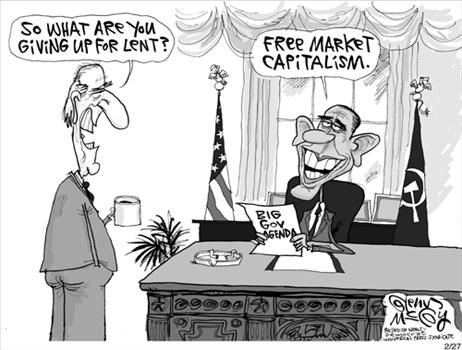
The first connection is at a general level, and concerns our abandonment of the Constitution. The present crisis did not appear out of nowhere, and didn’t simply begin with the election of Barack Obama. Politicians of both parties spent the better part of the 20th century disregarding the Constitution, as they looked to have government step up to solve every conceivable human problem. Thus it ought to be no surprise that the Constitution’s limits on government aren’t even part of the conversation today as our politicians debate the new interventions in our economy and society that seem to come daily.
Such a state of things would have greatly pleased America’s original progressives. As I’ve endeavored to explain in these pieces for the newsletter, progressives believed that the role of government should be determined not by our Constitution, but by whatever the needs of the day happened to be. This is why they sought to eradicate talk of the Constitution from our political discourse; today, that goal seems to have been realized.
The second connection between the original Progressive Era and our situation today has to do with policy. The progressives knew that our original system of government was not capable of handling all of the new tasks that they had in mind for it. So they envisioned creating a vast set of bureaucratic agencies. They argued that Congress should enact very broad and vague laws for supervising more and more facets of the American economy and society, and then delegate to the bureaucratic agencies the power and discretion to enact specific policies. Both Woodrow Wilson and Theodore Roosevelt conceived of government in this way.
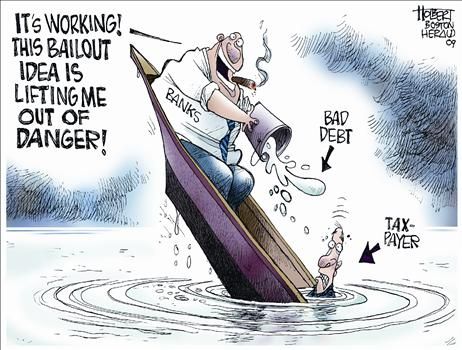
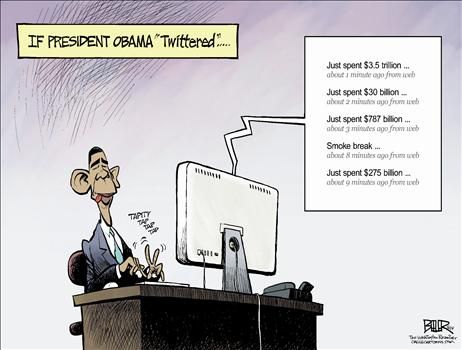
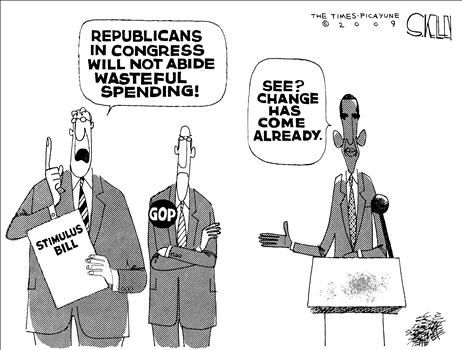
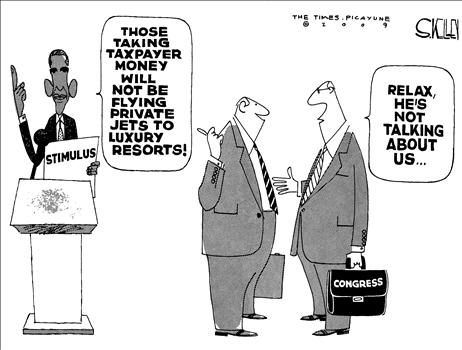
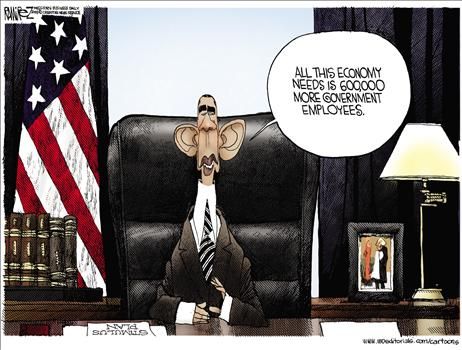
The New Deal certainly went a long way toward implementing this progressive vision, and what we have seen in our own situation with TARP and the various other interventions is simply greater steps toward the progressive plan. Our Congress has simply said to the Treasury agencies: here’s a trillion dollars, here’s all the legal authority you need, now go out, determine what is in the public interest, and spend and regulate accordingly. That is the progressive vision of government, in a nutshell.
For more on the Progressives, two of my books may be of interest:
1) American Progressivism, which I co-edited with American historian William Atto, contains a basic introduction to progressive ideas written by Professor Atto and me, and then several selections from the actual writings of Progressives like Wilson, TR, Dewey, Croly, and others.
2) Woodrow Wilson and the Roots of Modern Liberalism, which is a much more in-depth look at Woodrow Wilson and how he was central to originating the liberalism that dominates America today. This is for those who are really interested in history and political theory.


 Posts
Posts